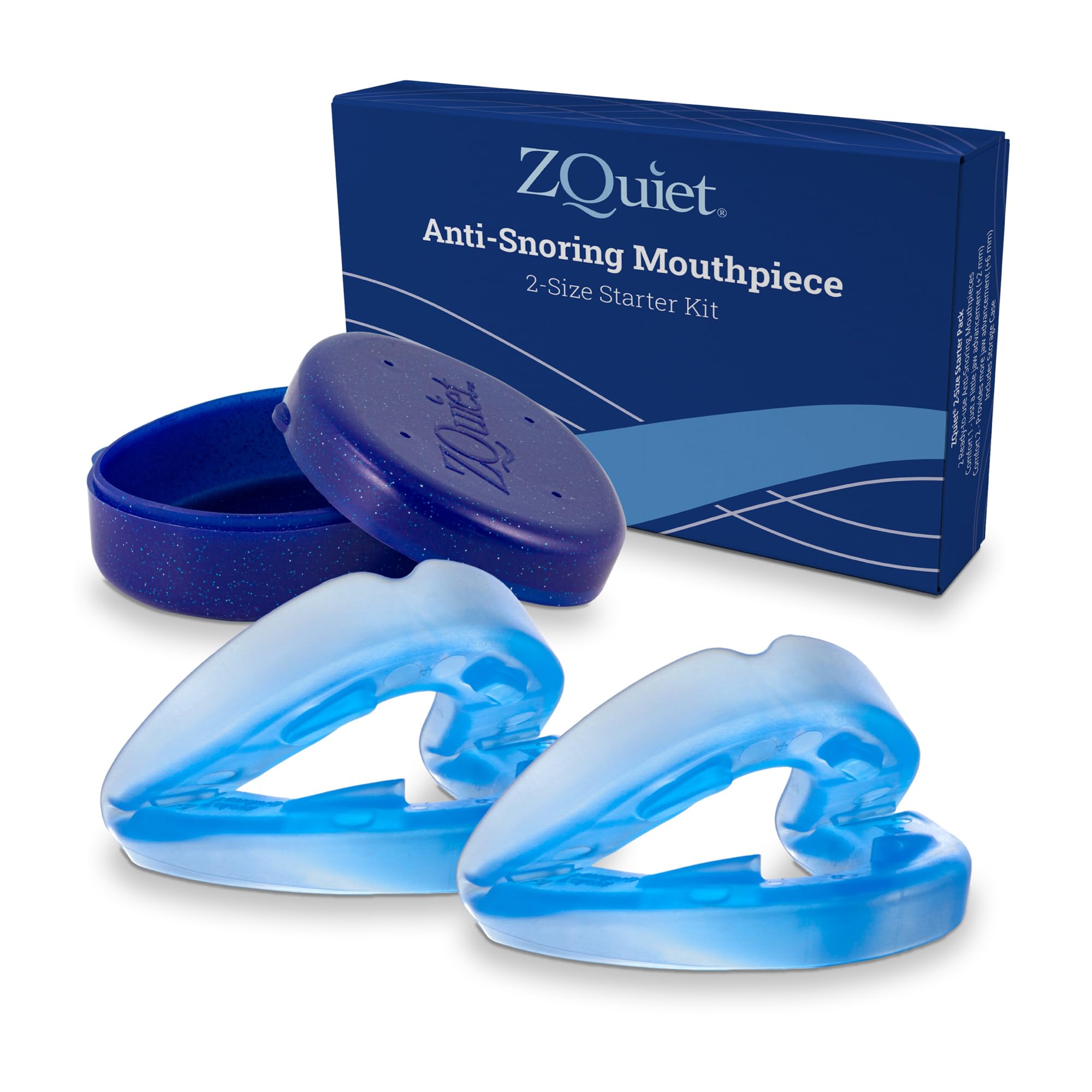
The ZQuiet anti-snoring mouthpiece is a notable entry in the crowded market of sleep aids designed to reduce snoring. Marketed as a starter pack with two sizes, it aims to address a common issue for those who snore due to tongue or soft palate collapse during sleep. After testing this device over several weeks, I found it offers a practical approach but comes with some notable trade-offs.
Real-world usage is straightforward: you boil the mouthpiece to soften it, then bite down to mold it to your teeth. The pack includes a small and a large size, which is helpful for first-time users who aren’t sure about fit. Once molded, you insert it before bed, and the design holds your lower jaw slightly forward to keep the airway open. I found the process takes about 5-10 minutes, and the mouthpiece feels reasonably secure once in place. It’s not uncomfortable enough to prevent sleep, but it does take a few nights to get used to having something in your mouth.
Key functional features include the Living Hinge technology, which allows the mouthpiece to flex with jaw movements. This is a genuine improvement over rigid designs, as it reduces jaw soreness and lets you talk or drink water without removing it. The open front design is another practical element—it leaves your front teeth exposed, making breathing easier than with full-coverage mouthpieces. This is particularly useful for people who breathe through their mouth at night. The starter pack’s two sizes are a thoughtful inclusion, as fit is critical for effectiveness; a poor fit can cause discomfort or failure to reduce snoring.
However, there are limitations. The mouthpiece relies on a boil-and-bite molding process, which isn’t as precise as custom-fit devices from a dentist. Some users may find the fit less than perfect, leading to slippage or pressure points. I noticed that after a few weeks, the material can stiffen slightly, requiring re-molding. Additionally, the device is not suitable for everyone. It works best for snoring caused by tongue or soft palate issues, but it may not help with snoring from nasal congestion or sleep apnea. For those with dental work like crowns or bridges, the molding process could be problematic, and the mouthpiece may cause temporary jaw discomfort in the morning.
Compared to other anti-snoring solutions, the ZQuiet sits between generic boil-and-bite mouth guards and more expensive custom-fitted devices. For example, a simple chin strap or nasal strips are cheaper but less effective for many people, while a custom mandibular advancement device from a dentist can cost hundreds of dollars and require a fitting. The ZQuiet offers a middle ground: it’s more effective than basic strips, but less reliable than a custom device. The two-size starter pack helps mitigate fit issues, but it’s not a guarantee of success.
- Strengths: Living hinge allows natural jaw movement; open front design improves breathing; two sizes help with fit; relatively affordable compared to custom devices.
- Weaknesses: Boil-and-bite fit may not be precise; material can stiffen over time; not suitable for sleep apnea or severe dental issues; may cause initial jaw soreness.
This mouthpiece is best suited for light to moderate snorers who want an affordable, non-invasive solution and are willing to spend a few nights adjusting. It is less suitable for people with sleep apnea, those who clench their teeth at night, or individuals with sensitive gums or extensive dental work. If you’re looking for a quick fix without a dentist visit, the ZQuiet is a reasonable starting point, but don’t expect it to work for everyone or every snoring cause.