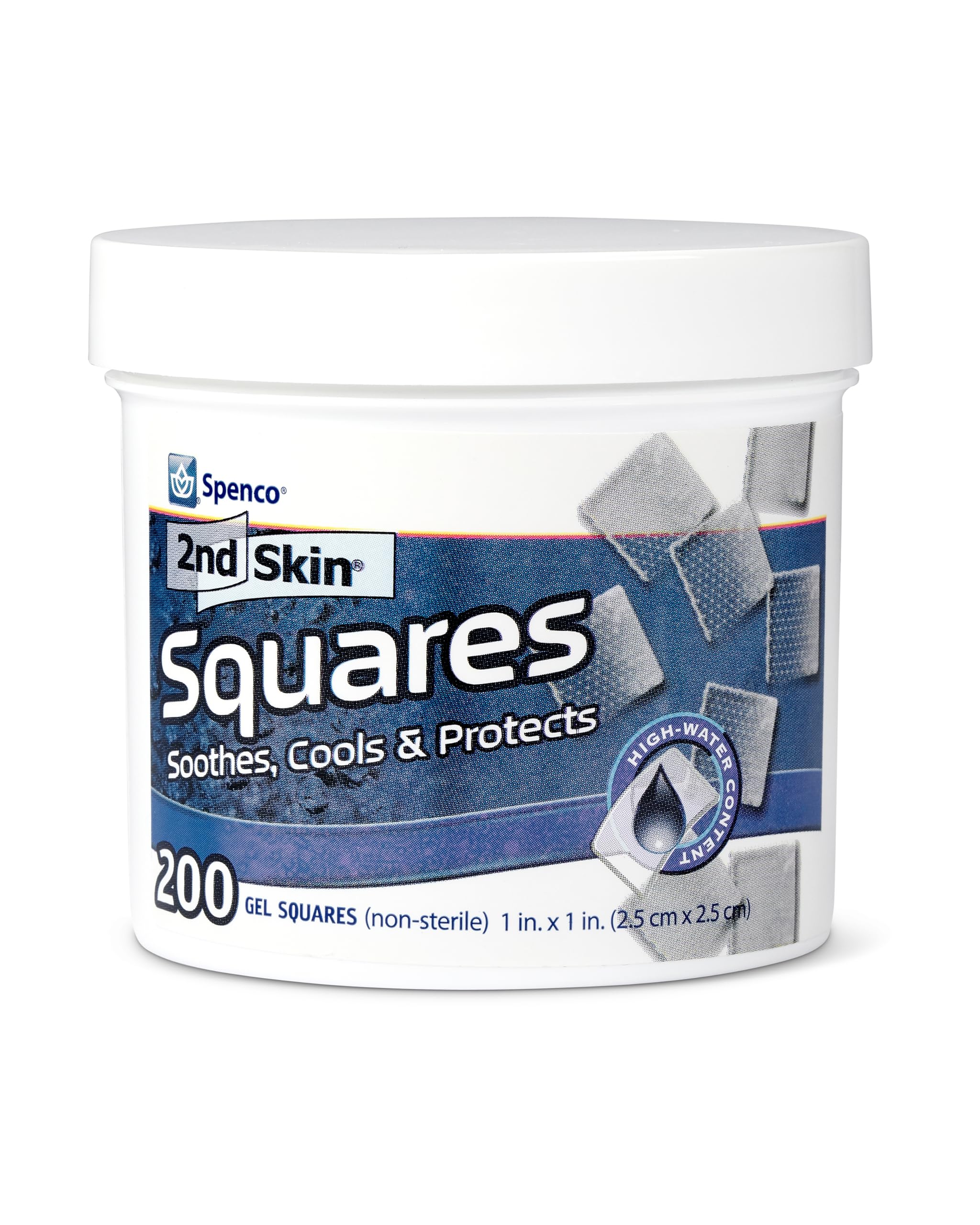
When you spend long days on the trail or in the gym, friction blisters can become a real problem. The 2nd Skin Dressing 1″ Squares (200 count) are a specific solution for this, offering a cool gel patch that sits over hot spots or existing blisters. These are not your typical bandage—they are designed to provide a moist healing environment while reducing friction.
In practice, these squares work well for areas where skin rubs against gear, like heels, toes, or even under a backpack strap. The gel is 95% water, which gives it a cooling sensation and helps keep the skin hydrated. Users often apply them directly to a clean blister or a red spot before it becomes a full wound. The non-stick surface means the dressing won’t pull at the skin when removed, which is a common complaint with adhesive bandages on sensitive areas.
However, there are trade-offs. The 1″ size is quite small, so it covers only a limited area. For larger blisters or multiple spots, you may need several squares, and they can be tricky to apply precisely without overlapping. The adhesive backing is decent but can lose grip if the skin is sweaty or oily, especially during intense activity. Some users find they need to secure the dressing with medical tape or a wrap for longer hikes.
Compared to standard moleskin or foam blister pads, the 2nd Skin dressing offers a different approach. Moleskin is thicker and more durable for repeated friction, but it can create a bump that might shift. The gel dressing is thinner and more flexible, conforming to the skin without adding bulk. It also provides immediate cooling relief, which moleskin does not. That said, moleskin tends to stay put better on sweaty skin and lasts longer before needing replacement.
This product is suitable for athletes, hikers, or anyone who gets frequent friction blisters from shoes or equipment. It works best for small, localized spots and for people who prefer a moist healing method over a dry pad. It is less suitable for large wounds, deep cuts, or areas with heavy sweating where adhesion might fail. Also, if you need a dressing that stays on for multiple days without fuss, this might not be your first choice.
In terms of real-world usage, many users carry a few squares in their first aid kit for emergencies. They are lightweight and portable, fitting easily into a small pouch. The 200-count box lasts a while, but you might go through several squares per blister episode, especially if you need to change them daily. The cooling effect is noticeable but fades after a few minutes as the gel warms to body temperature.
One limitation is that the dressing can dry out if left exposed to air for too long. Once opened, it is best to use the square promptly. Also, the package is not resealable, so you need to store the remaining squares carefully to keep them from drying out. Some users report the gel can seep out slightly if the blister is punctured, but this is rare.
Overall, the 2nd Skin Dressing squares are a targeted tool for blister management, not a universal bandage. They excel in providing relief and protection for minor friction injuries, but they require proper application and occasional reinforcement. For those who understand these limitations, they can be a helpful addition to a hiking or sports kit.