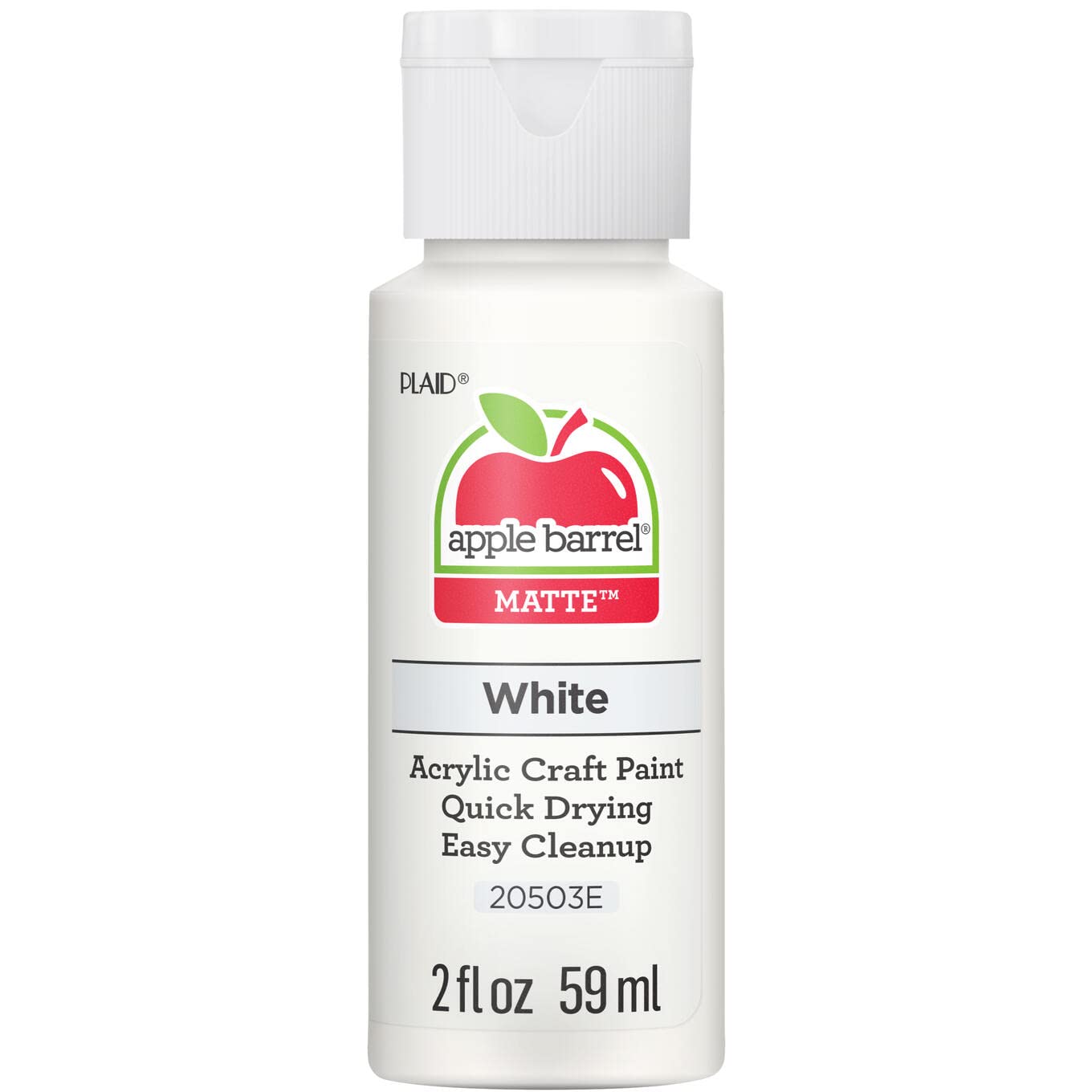
Apple Barrel acrylic paint is a staple in many craft rooms, and the 2-ounce white tube (color 20503) is one of the most commonly used shades. This review covers how this paint performs in real-world crafting, from base coating to mixing, and where it falls short compared to higher-end alternatives.
In practice, this paint is used mostly for covering large surfaces, priming foam or wood pieces, and mixing with other colors to create pastels or lighten shades. It is a flat, matte finish paint that dries quickly, which is helpful when you are layering or working on multiple projects at once. The consistency is noticeably thinner than artist-grade acrylics—almost like a heavy cream—so it spreads easily but may require two or three coats for full opacity, especially over darker surfaces.
One of the key functional features is its affordability. At roughly a dollar per bottle, it is one of the cheapest craft acrylics available. It is also non-toxic and water-based, so clean-up is simple with soap and water. The 2-ounce size is generous for the price, making it a practical choice for school projects, party decorations, or any situation where you need a lot of white paint without spending much. The bottle has a flip-top cap that is easy to open and close, though it can sometimes get clogged if paint dries around the rim.
However, there are clear limitations. The coverage is not as strong as more premium brands like Liquitex Basics or even FolkArt. If you are painting a dark base, you will likely need three coats to get a solid white. The paint also lacks the pigment load of higher-end products, so colors mixed with this white can appear chalky or slightly dull. It is not ideal for fine art techniques like glazing or blending on canvas, as it dries too quickly and does not level evenly. Additionally, the finish can be a bit brittle when dry, so it may crack if applied thickly on flexible surfaces like fabric or plastic without proper preparation.
Compared to a product like Liquitex Basics white, this Apple Barrel is less opaque and less smooth. Liquitex handles better for brush strokes and has a more buttery consistency. But for the price difference—Liquitex costs about four times more per ounce—Apple Barrel is a reasonable substitute for non-critical uses. Another alternative is Martha Stewart Crafts acrylic, which offers better coverage but is harder to find in stores. For most crafters, the trade-off between price and performance is acceptable as long as you adjust your expectations.
Who is this paint for? It is suitable for beginners, children, and anyone working on temporary projects or crafts where precision is not the priority. It works well for base coating foam shapes, painting cardboard, making signs, or any project where you will be applying multiple layers. It is also a good choice for mixing large batches of custom colors for party favors or classroom activities.
Who should skip it? If you are a serious painter working on canvas or wood art that requires smooth, opaque coverage with minimal effort, this paint will frustrate you. It is not designed for fine detail work, wet-on-wet techniques, or professional-grade finishes. Also, if you need a paint that adheres well to slick surfaces like glass or metal without chipping, look for a dedicated multi-surface paint instead.
Overall, the Apple Barrel white is a functional, budget-friendly option that delivers exactly what you pay for. It is not going to replace your studio-grade paints, but for everyday crafting and large-scale projects, it gets the job done. Just plan on using extra coats and accept that the finish will be matte and slightly porous.